Sunday, March 3, 2019

Deuteronomic History - Vic. Jethro Rachmadi

Last week Rev. Billy Kristanto delivered the topic on Deuteronomic Theology in our Bible study (click link to read his discussion on Deuteronomic Theology: http://look-ing-up.blogspot.com/2019/01/the-deuteronomic-theology-rev-billy.html).
Today, we will not be discussing only the theology of Deuteronomy, but also its role and effects on history.


INTRODUCTION


We have learned previously that one of the primary themes of Deuteronomic Theology is retribution theology (Indonesian: hukum tabur tuai (the law of sowing and harvesting)). If you are a good person, you will be blessed, if you are a bad person, you will be cursed.
In Deuteronomic Theology, there is a treaty-like format / writing system, which is very much resembles the Suzerain-Vassal Treaty (literally translates to Lord-Servant Treaty). This was a universal treaty format during the ancient time, which provides guidance to writing a treaty, specifically between a lord and a servant.
Here's the format and structure of the Suzerain-Vassal Treaty:

  1. Preamble:
    The identification of both parties bound in the contract.
  2. Prologue:
    What the lord has done so far for the servant (the story so far).
  3. Stipulations:
    The laws and regulations ought to be fulfilled in order for this treaty to be valid.
  4. Blessings / curses:
    The rewards and punishments received by the servant from the lord when the stated laws are fulfilled or neglected.

Interestingly, we could find these exact same four elements in the book of Deuteronomy:
  1. Preamble: Deut 1:1-5
    Yahweh spoke to Israel through Moses.
  2. Prologue: Deut 1:1-11
    The story so far and what Yahweh has done for Israel in the past.
  3. Stipulations: Deut 1:12-26
    The deeds to be done and not to be done.
  4. Blessings / curses: Deut 1:27-34
    The outcomes (blessings and curses) of their respective deeds.
These four elements are not found in any other Pentateuch books. Now that we have seen how treaty-like and retributional the book of Deuteronomy is, we will discuss its effects on history.

The book of Deuteronomy ends the five Pentateuch books, and it also acts as a precursor of a new way of writing, such as the Deuteronomy school and the book of Joshua. Here are some more examples:

  • In the book of Joshua, Israel obeyed God and won battles, yet Achan disobeyed God by plundering forbidden objects and Israel lost the battle. This shows an obvious application of the retribution theology.
  • In the book of Judges, Israel sinned and was damned, and they gained salvation when they repented.
  • In the books 1-2 Samuel, there is too a contrast between Saul and David. Saul sinned and was damned, David was obedient and was blessed. Yet, when David disobeyed God, he too was damned.
  • In the books 1-2 Kings, we see the same repeated pattern of "and he did what was evil / right in the sight of the LORD" and the blessings / curses which follow.
Patterns such as these are not present in the books prior to the book of Deuteronomy.

Therefore, we must view history and read the Historical books (Joshua, Judges, 1-2 Samuel, 1-2 Kings, etc) in light of the retribution theology.


THE TWO VOICES OF THE RETRIBUTION THEOLOGY

The question arises is, "why do these books emphasize so much on retribution theology?"
We are not merely comparing the Old Testament with the New Testament. We are not implying at all that deeds are all that matter in the Old Testament and grace is all the matter in the New Testament.
In fact, there are many occurances when the Old Testament seems to be against Deuteronomic and retribution theologies. For instance, the books of Job, Ecclesiastes, and Psalms 73. It's as if we spot two clashing theologies in the same Bible!
Today, we will focus our discussion specifically to the books of Kings and Chronicles.

Why was the book of Deuteronomy very uplifted and glorified, that more than two-hundred references of Deuteronomy were made in the New Testament?
Moreover, out of all Old Testament references Jesus made, He referred to the book of Deuteronomy the most. Yet it seems that Jesus was questioning the retribution theology several times Himself. When He was asked whether a blind man was blind because of his own sins or his parents' sins, His answer was, "It was not that this man sinned, or his parents, but that the works of God might be displayed in him" (John 9:3). It seems here that Jesus erased the category of retribution. Jesus has also said, "for He makes His sun rise on the evil and on the good, and sends rain on the just and on the unjust" (Matthew 5:45), which the Reformed Theology is referred to as common grace. It might be easy on the ears for us reading this passage today, but for the Israelites at that time who held onto the retribution theology so dearly, Jesus' saying was difficult for them to accept. Even today, retribution theology is our default mode when we come before the LORD's presence, especially if you are a conservative. Similarly, even if you are a good citizen in your country, you would feel a little fear when a cop passes by. And whether it is within our awareness or not, we like to think that it is dangerous to not attend a church service, because we believe God would punish us. Let alone the Israelites who held onto the retribution theology so dearly. They were in shock when they heard Jesus spoke of the common grace theology.
There might be those who consider themselves fugitives, and upon knowing of the common grace, they would find relief. On the other hand, the Pharisees and scribes might think, "if this Jesus proclaimed that retribution theology is invalid, what then is my point in living an obedient life?"

On that account, we could find two different voices in the Bible in dialogue, instead of one singular voice. Imagine watching a play with two characters with two different voices speaking to each other in a dialogue. If we want to get the full picture of the play, we must not listen to only one voice, but to both. Alike, if we want to read the Bible as a whole, we must listen to both voices.

The books of Kings are very affected by the Deuteronomic Theology.
The books of Chronicles, on the other hand, seem to be not affected by the Deuteronomic Theology.
We often think that the books of Chronicles are tedious because it it full of repetitions. Whereas, it speaks with a different voice than the books it precedes.
We will first discuss the books of Kings.


THE BOOKS OF KINGS

2 Kings 21 tells the story of King Manasseh, a king evil in the sight of the LORD. In fact, he was the worst and most corrupt king of the Southern kingdom of Judah, reigning for 55 years, making him Judah's longest reigning king. He was also the first king who did not befriend any king from the Northern kingdom of Israel.
A piece of brief historical information: the Northern and Southern kingdoms split during the reign of King Hezekiah, Manasseh's father. Yet, unfeared by this event, Manasseh continued to blaspheme the LORD.

2 Kings 21 lists down all Manasseh's disobedience, which shows how severely he has disobeyed the Deuteronomic law. He also performed child-sacrifice and consulted mediums. As a result, God proclaimed to bring Jerusalem and Judah to destruction as He did to the Northern kingdom when Israel was exiled in Assyria (2 Kings 21:11-15).
We later know that God's words came true when the Southern kingdom fell into the hands of Babylon, although it happened long after Manasseh's death.

Now we see Manasseh's descendant, King Josiah (2 Kings 23:4-24). Josiah was the best king of Judah, "before him there was no king like him, who turned to the Lord with all his heart and with all his soul and with all his might, according to all the Law of Moses, nor did any like him arise after him" (2 Kings 23:25).
His success in reigning Judah was as a result of his obedience (retribution theology).
However, in verse 26, God said that Josiah's righteousness as mentioned in verse 25, still could not surpass Manasseh's evil, that He would not revoke his curse towards the Southern kingdom, even long after Manasseh's death. "Still the Lord did not turn from the burning of His great wrath, by which His anger was kindled against Judah, because of all the provocations with which Manasseh had provoked Him" (2 Kings 23:26). God still "could not move on" from His anger towards Manasseh for two generations. What caused God's prolonged great wrath towards Manasseh, even long after Manasseh's death? Wouldn't it be the same as saying, "Martin Luther, John Calvin and Zwing Li rose, but God still remembers Pope's sins and because of this reason, churches will still collapse!"?

Now let's slightly change gear to how the same story is delivered in the books of Chronicles.

Saturday, February 23, 2019

Envious vs. Generous - Rev. Billy Kristanto

Today, we will discuss one of Jesus' parables, "Laborers in the Vineyard", from Matthew 20:1-16. We will discuss the parable verse by verse.

Verses 1-2
In this parable, the laborers depict us, while the master of the house depicts the LORD.
In verse 2, the laborers proposed that they were to be paid a denarius for a day of work, and the Lord agreed. Here, the laborers were negotiating in a take-and-give manner with the Lord. Yet, the Lord agreed to the contract and let them work for him.

Verses 3-4
At about the third hour (translated to 09:00 am), we find the Lord going out of his house finding some idle men at the marketplace. Then he asked them to work for him as well, without making any deals with them. The Lord did not say, "work in my vineyard, if you start working at 09:00 am and end at 06:00 pm, you will be paid 75% denarius at the end of the day." But what the Lord told them was, "whatever is right I will give you." In other words, "what I think you deserve, you will receive."
And they did as they were told obediently.

Verses 5-7
Here, we read that the Lord goes out of his vineyard several times to find more workers, showing the LORD's abundant grace for those who are willing to work for His kingdom.
In these verses, the sixth hour means 12:00 pm, the ninth hour means 03:00 pm and the eleventh hour means 05:00 pm.
Despite these men's late start, they were willing to work for him without any negotiation, calculation nor deals with the Lord. They might perhaps think within themselves that they would get one-tenth a denarius at the end of the day (if they begin working at 05:00 pm and ends at 06:00 pm). But they did not speak up to negotiate the deal.

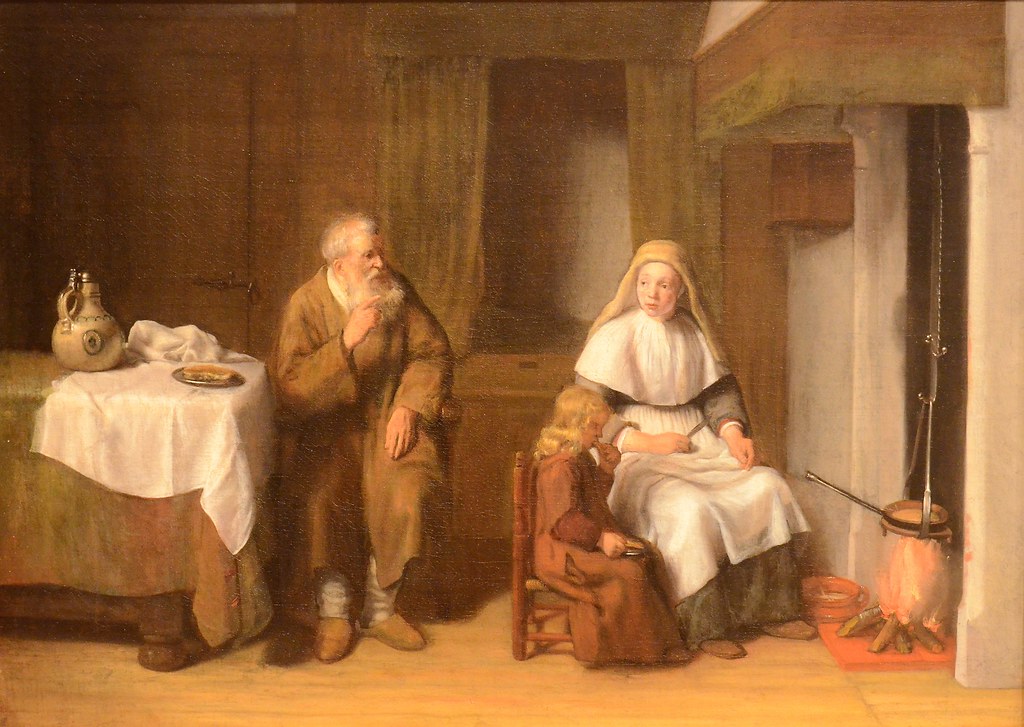
Painting of the Parable, by Jacob Willemszoon de Wet, mid-17th century

Verse 8-10
This part is really important. Why did the Lord pay those who work the latest first? It would make a lot more sense to pay those who work the earliest first.
The question is, what difference would it make if the Lord pays those who work the latest first, versus if the Lord pays those who work the earliest first?
Answer:
  1. The Lord wanted the early laborers to witness him paying a denarius to those who work for an hour only, with the mean to teach them a lesson.
  2. And/or the Lord wanted to show the severe corruptness of the early laborers' hearts.

Thursday, January 31, 2019

Advent with Elijah - Vic. Jethro Rachmadi

This advent season, I would like us to observe the story of Elijah from 1 Kings 17:8-24.
This chapter consists of two pericopes, "The Widow of Zarephath" and "Elijah Raises the Widow's Son".

To begin with, let us dive into the character and context which this text was written.
Idol worship prior to the reign of King Ahab was “only” through cultural aspects: food, fashion, arts, etc. Yet during the reign of King Ahab, he made a system to idol worship through the annihilation of YHWH’s prophets. The events which 1 Kings 17:8-24 took place were when Elijah was YHWH’s last prophet, causing Elijah to be a minority.
Also take note that at that time, God also quit pouring rain as mentioned in 1 Kings 17:1.
Meanwhile, rain was the symbol of Baal, as Baal was believed to be the god of rain.

Through these three pericopes, we will see how “precious” Elijah’s life, because Judaism and Christianity “depended” on Elijah.
Through these stories, we will see how God worked to sustain Elijah.

Image result for the widow of zarephath
The Prophet Elijah with the Widow of Zarephath and Her Son, by Abraham van Dijck

"THE WIDOW OF ZAREPHATH"

God told Elijah to go to Zarephath, without Elijah knowing why. Yet, readers in the past would have been surprised to read this. In the New Testament, Jesus also retold this story of Elijah. And right after He did, He was threatened to be thrown off a cliff by the crowd! But why is this story so offensive for readers in the past, and perhaps to Elijah as well? Because the instruction that tells the last YHWH's prophet to go to Zarephath was illogical for two reasons:


  1. Both the Old Testament and New Testament always mention Zarephath being in Sidon, instead of merely the city of Zarephath alone, and we know Sidon is outside of Israel. It means that God asked Elijah to go outside of Israel to obtain his salvation from the oppression of King Ahab. Not only that, but Et Baal, the King of Sidon, was Jezebel's father, Ahab’s father-in-law. God has asked Elijah to go to Jezebel’s city, the city of a woman who sought his life. God has asked Elijah to go into the devil’s den.
  2. Not only did God imply that salvation will come from Jezebel's city, but salvation will also come from a gentile, a woman, a widow and a poor. Back then, women had no right whatsoever, they were mere properties, more so if they are widowed and poot. And yet God has declared that Elijah’s salvation will come from this woman. If you have not been surprised enough, let me make this relevant for your generation. It is equivalent to God wanting to save Christianity today through the hand of a transgender. The same impact occurred to Elijah when he heard of this instruction.

But why did God instruct Elijah to do so? If this is only a matter of giving Elijah bread to eat, then God could have used any widows in Israel. But God wanted to show that He is a gracious God and that there is a dark side of grace: He wants to show us that it is sometimes difficult to accept God’s grace. How could such a person be favored by God and receive His mercy?

False gods require men to provide some kind of an asset to reach the gods. Or maybe for us, we think there are certain requirements in order for us to be accepted and used by God: money, the requirement to possess the Holy Spirit, the requirement to learn the Bible well, or even the requirement to use hymns and not drums.
Yet, this is not the God of Christianity. Besides, could we ever apply the standards we use for others to judge ourselves? Remember that God works by bypassing all these human categories.

There’s a female pastor called Nadia, a quite questionable pastor actually, but she mentioned something very interesting. She said repentance is not a prostitute becoming a librarian, but a prostitute disgusted by herself, coming to the church, despised by the church, yet accepted by God. And she still comes to the church anyway because she knows although men do not accept her, God does.
Tim Keller once asked an atheist what kind of a god the atheist actually despises, and the atheist answered, “I don’t believe in a god who determines whether you are good or bad, and if you’re bad he punishes, if he’s good he’d be gracious”. And Keller said, "I too do not believe in that kind of a god".
This is what differs Christianity from religion: the absence of polarization between the insider and the outsider based on certain the requirements.

Wednesday, January 23, 2019

The Deuteronomic Theology - Rev. Billy Kristanto

The first thing that comes to mind when encountering the Deuteronomistic Theology is the fact that it could only be found in the Old Testament, in the book of Deuteronomy.
However, the Deuteronomistic Theology is extended all the way to the New Testament.
Prior to the canonization of the Holy Bible, it is possible to add additional books into the scroll, such as the book of Deuteronomy, which ended the Pentateuch. Yet this addition is enriching and does not promote inconsistency.


CONTEXTUALIZATION

Let us first take a look at the term Deuteronomy, which is a rather inaccurate term. This term first emerges from Deuteronomy 17:18: “And when He sits on the throne of His kingdom, He shall write for Himself in a book of a copy of this law, approved by the Levitical priests”.
Deuteronomy literally means "second law": deuteros being "second", and nomos being "law". However, given that it is the "second law", it does not mean that it is a second law, revealed as a replacement of the first, yet it could be understood as an expansion or reiteration of the first law given at Mt. Sinai.
We must also acknowledge that the Bible encourages contextualization, and never promotes untouchable tradition. The book of Deuteronomy is full of repetitions. In fact, the book is entitled Kitab Ulangan in Indonesian, which literally means the Book of Repetitions. Yet these repetitions are not without freshness, therefore it is not a tedious book. The book was written to remind different generations at different time periods of the law. This is contextualization.
The context which Deuteronomy 17:18 was written was after Israel entered the promised land, hence it was written to a different audience than those who were present at Mt. Sinai.
Previously, God exclusively spoke through Moses, now God spoke to the people almost directly.

Related image
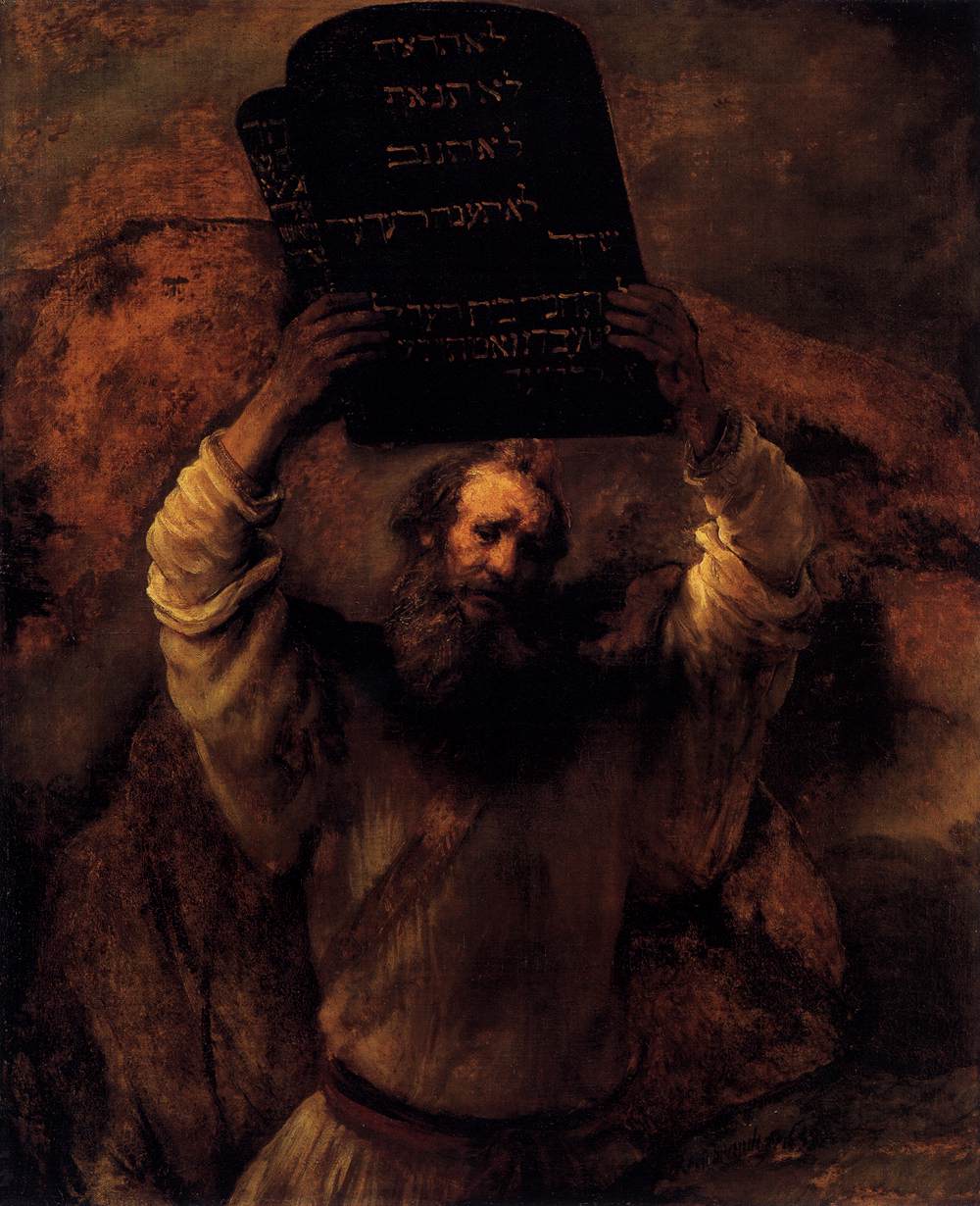
Moses with the Ten Commandments, by Rembrandt van Rijn

A COVENANTAL LIFE

Speaking of law, we must also speak of the structures of covenantal life. YHWH, the God of Israel is "bound" in a law-structured (torah-structured) covenantal relationship with His people.
The law is often viewed negatively at some parts of the Scripture. The book of Galatia, for instance, suggests that the law proves men’s need for the gospel due to men's incapability of fulfilling the law, according to Martin Luther. Yet in the Old Testament, especially in the book of Deuteronomy, the law is pictured as a beautiful, God-given grace to mankind, for the sake of a well-ordered community.
“More generally, these laws, both individually and in their entirety, are a gracious gift of God for the sake of life, health, and well-being of individuals in the community. This is made especially clear in the book of Deuteronomy. As Deut 5:33 puts it: these laws are given to God’s people “that you may live, and that it may go well with you, and that you may live long on the land that you are to possess.” God gives the law in the service of life. If for no other reason than that, they deserve our close attention” (Patrick Miller).
In Matthew 19, when the young rich man came to see Jesus asking what he must do to inherit eternal life, Jesus’ response was “Torah”. We could view His response from two perspectives. Jesus might intentionally make the young man aware of his incapability so he would be humbled, yet Jesus might have responded like so to make the young man live. Although, we do know the ending to that story and how the young man fell short.

Moreover, we believe in the three uses of the law. The first being pedagogical use, the law reveals the perfect righteousness of God and our own coming short of it (what Martin Luther emphasized on), the second being civil use, the law restrains evil through punishment, and we must never forget the third use of the law, that is as a normative use, the moral standards of the law provide guidance for believers as they seek to live in humble gratitude for the grace God has shown us.
Therefore, we must remember that the law also includes the rules and regulations to perform a sacrifice of atonement. Both the confession of sin and sacrifice of atonement must be done to avoid the pride of self-righteousness. Above all, we must never forget the third use of the law, that is the law as good news for those who have gained a new life in Christ.


THE CANON AND DEUTERONOMY

The book of Deuteronomy is an important part of the Pentateuch. It is located at the end of Pentateuch, being the closure of the five books of the law, and it also precedes the books of the prophets, which begins with the book of Joshua. As a closure to the Pentateuch, Deuteronomy recalls all the promises given to the ancestors of Israel, it retells the grand stories of the exodus and the events experienced by the ancestors at Mt. Sinai. But the book also includes Israel’s entering into the promised land. Deuteronomy does not only recall the previous four books but also anticipates the entering to the promised land in the book of Joshua.

This implies that the revelation of the law is not a once-and-for-all matter, but integral. The events that had happened, happened prior to Mt. Sinai, but the stories were retold according to the contextualization of the newer generations, time and places.


THE CENTER OF DEUTERONOMY

The main theological points of the book of Deuteronomy are:
  1. The suppression of idolatry
  2. Centralization of a worship place/cult centralization
  3. Renewal of the covenant

Sunday, January 6, 2019

Irresistible Grace - Vik. Jethro Rachmadi

Our scripture reading today is taken from 1 Samuel 27-29, which consists of three pericopes: "David Flees to the Philistines", "Saul and the Medium of En-Dor", and "The Philistines Reject David".
The first chapter speaks of David's problem, the second, Saul's problem, and the third, God's salvation.


Image result for achish king of gath david
David feins lunacy before Achish king of Gath

David was in great distress and his faith weakened. We could sense David's doubt in 1 Samuel 27:1 when he said, “Now I shall perish one day by the hand of Saul. There is nothing better for me than that I should escape to the land of the Philistines. Then Saul will despair of seeking me any longer within the borders of Israel, and I shall escape out of his hand.” The problem is that he resolved his distress without consulting God. In fact, God is not mentioned once in this chapter, we call this a God-less text. Another evidence of David's weakening faith is the fact that he left Israel and fled to a Gentile country. This action is significant in the ancient time, for the Israelites could not worship YAHWEH without living in the land of the chosen people. Those who do not live among the chosen people were often exiled by God. But David fled the land without God's instruction nor consultation. David weighed his own options, had a debate in his own heart and won the debate for himself. DA Carson once said that after we lose a debate with a person, we would then have another debate in our heart. Just if I said this or that point to him, I would have won the debate. And at the end of the day, we would consider ourselves winners in our hearts.
David fled to the Philistines to find safety, and unfortunately, his plan was successful, for Saul had stopped chasing after him. It was unfortunate because there could be success even in perversion or sin. Proverbs 16:25 says that "[t]here is a way that seems right to a man, but its end is the way to death." In this situation, we are faced with a trial of whether we choose to love God or success, and we often use God to achieve our success. From a human point of view, David was incredibly successful in his battle plan. He eliminated many cities for the sake of fooling Achish. To put that into perspective, Saul only managed to eliminate one city.

Wednesday, December 12, 2018

Advent with Moses - Vik. Jethro Rachmadi

Another word for advent is expectation. Our life often does not turn out as we expected, often the reality doesn’t meet our expectation. GRII KG choir just opened an application for new members, and some people came up to me and ask why they have not succeeded in the choir yet? I told them, the point of learning music is more than just an instant-fried-rice kind of a thing, but more like a long-processed steamed food. Choir practice takes a long time as steaming is to cooking. So does our expectation towards God and how it will dictate how we live.

Our scripture reading today are from Numbers 21:4-9 and John 3:12-15.

Image result for bronze snake painting
Moses and the Brazen Serpent
by Peter Paul Rubens (1577-1640)
Reading Num 21:4-9, we might consider God as a sadistic and mean Being. People were bored of manna and He got angry. He was also being "impractical" by asking Moses to build a bronze snake in order to bring salvation. Reading John 3:12-15, we see it's as if God needs to be plead to in order for Him to help us.

Reading the original language, the term snake here is seraphim. Actually, snakes are referred to as seraphim over fifty times in the Bible (seraphim means “to be fiery”). While it’s only used once in the Bible to refer to as an angel. So why is snake here referred to as seraphim? It’s because snake bites cause a fiery, feverish and immense thirst effect on your body before you eventually die.
The question is, is this a proportional / deserving punishment by God? Is the punishment too much for such a simple transgression? But we can always assume that God’s punishment is never wrong, which only means that God considers sins as serious matters. This part teaches us how serious sins are.

Furthermore, we’re going to learn a little lesson from history. We know of the two eras: modern (early 18-20th century (the enlightenment era)) and post-modern (20th century above). In the modern era, it is believed that men are good by nature. Crimes happen due to external factors (poor education, poor moral knowledge). So, they had a dream that one day, the problem of humanity will be solved. In contrast, in the post-modern era, we believe that men are bad internally by nature. Pay attention to old vs new movies. New movies don’t create bad vs good characters. There’s always good in the bad and bad in the good, and the main character could turn out to be a bad guy, even a cop. How and why the drastic shift? There are many factors, but one of the leading factors are WWI and WWII. Men’s positive optimism was crushed by the brutal death of many during the wars, especially at the end of WWII when the world figured out about the Holocaust and the concentration camps. They were even more surprised to find out that the culprit was Germany, such an educated and modern country, which gave birth to people like Bach and Beethoven. So, people began asking the question of how men could act such terrible deeds? The two possible answers are that there is something wrong with them (The Nazis, Japanese, Stalin, etc), or another alternative, there’s something wrong with us all as humans. Of course, we believe that there’s something wrong with them, and not us generally as humans. But, notice that that’s the exact same thing Hitler proclaimed at the beginning of the war, “there’s something wrong with the Jews, so we need to annihilate them.” People look down upon others, so they feel more superior to look down on others (it’s a cycle). If we say that there’s something wrong with them and not us all, then how different are we than Hitler? So, the only answer left is that there’s something wrong with us all. Entering the modernism from postmodernism, we should realize that we are capable or there is a potential of us becoming a Hitler, there’s no fundamental matter that could keep us from being like Hitler, and this is the root of why he created the Holocaust.

Yet, this is what the Bible has been proclaiming over and over again, there is evilness within men’s hearts—that is sin—which is a very serious matter, and we need to clean our glasses to see our “simple” or “inconsequential” sins to be more than it looks. Meaning that in Num 21, God was right and just to punish them that way. What exactly was their sin? It was a sin that says, “nothing is good enough” (verse 5). In our lives, we could be unthankful of a lot of things, our parents, family, mom, dad, children, or even the Bible and sermons. Jonathan Edwards said that the most primordial sin of mankind is saying, “the garden of Eden isn’t good enough”, because they said, “we can do all things in this garden, but one thing”, and the serpent asked them if that’s good enough for them, and the fell. But this is the nature of all mankind, even if we are in Eden right now, we would find something that’s not good enough. Often the problem is not in the situation, but in ourselves, because everything is not good enough. It seems like we have all been bitten by snakes and the venom has run through our veins saying that things aren’t good enough. Take your monthly tithes, for instance, you say, “I need to think of myself too, not only the church”, on the other hand, there’s a really religious person who says, “I’m good because I give my tithes, those who don’t are not real Christians”. By saying so, this religious person has belittled the blood of Christ by saying that the blood of Christ is not enough.
The Israelites here had a fever of seeking more and ever thirst for something that will not satisfy them. There are a fire and desire burning inside their hearts. The same effect when a snake’s venom enters their body, “fiery, feverish and immense thirst”. God was trying to show them physically what God sees inside their hearts spiritually. We need to pay attention to the physical and spiritual connection in the Bible. Like how Naaman was healed so his skin was like of a newborn because his spirit was being reborn. Alike, God was showing the Israelites that the condition of their hearts was more serious than the suffering and death they’re experiencing physically.

Tuesday, October 23, 2018

The Father's Testimony of the Son - Rev. Billy Kristanto

Scripture Reading: John 5:31-40

The title Lembaga Alkitab Indonesia (Bible Institution of Indonesia) gives to this pericope, "Kesaksian Yesus tentang Diri-Nya" (The Testimony about Jesus about Himself), is not appropriate, for it is said in verse 31 "If I alone bear witness about myself, my testimony is not true", if Jesus testifies about Himself, that testimony becomes an invalid testimony. Jesus did not testify about Himself, but about the Father. The Holy Spirit testifies about Jesus. And in this section, we read that the Father testifies about the Son. This is the Trinitarian Personhood, each does not testify about Himself; self-testimony shows human's narcissistic personality, not Trinitarian Personhood.

We are created in the image of God, therefore we must follow the movement within the Trinity, and not create our own concept of personality that has been intoxicated by sin. We have often heard the word sin, but what is the true meaning of sin? Sin is of many dimensions, one of them if we discuss in the Trinitarian understanding, that is the perverse concept of personality that does not correspond with the Trinitarian concept. So, it is not that the Father testifies about the Father Himself, the Son testifies about the Son Himself, the Holy Spirit testifies about the Holy Spirit Himself, these are not the Trinitarian that we read in the Bible; what is written is that each testifies about the other persons.

Image result for jesus baptized painting

We might testify in perversion if we testify about ourselves, we could diminish our shortcomings and failures, we bloat our virtues as much as possible, even if they exceed reality. Jesus would never have done that. If you pay attention here, say if Jesus testifies about Himself, His words must be true, and nothing wrong, because He is Jesus. But according to the faith of Christianity, the problem is not only the 'content' of the true testimony but also 'who' testifies it. Just if Jesus testifies about Himself, then the content must be right, but here Jesus says that that testimony becomes incorrect. Why? Because it is not right for Jesus to testify about Himself.

In the first chapters, we have discussed that in our daily life, the most common setting for witnessing is courtroom; which means there should be an accused and a witness (a person who testifies). Therefore, if Jesus testifies about Himself, He would be in the accused position, as well as the witness; if that is the case, we should might as well say that He could too be the judge. And because Jesus is the Judge, He would always win the case. But that is not what is written on the Scripture. Verse 31 is very relevant in our life, because we alone are not free from being talked about behind our backs, which is often slanderous and full of misunderstanding, and we are tempted to defend ourselves. We are tempted to testify about ourselves. Yet, according to Jesus, testifying for ourselves will not be a valid witness. We are not called to be a witness for ourselves; we are called to be the witness of Christ. A personality that revolves around oneself is non-Trinitarian, but a sin. The denial towards the concept of the personality of the Trinity is a sin.

In the Bible, we see a strong connection between the understanding of the Trinity with eternal life.  If you read the books of catechism, including the classic Reformed confessions and catechisms such as Heidelberg, Belgic, Second Helvetic, Canons of Dort, Westminster, Geneva Catechism that Calvin wrote, you can obtain many insights about the Trinity. The understanding of the Trinity is the fundamental of eternal life. If we do not know and understand the Trinitarian God, we do not inherit eternal life, and the Scripture confirms this. The question is, how should we understand the Trinity? You should be careful with the idea called formulae Christianity, that revoles around a formula, " O, my understanding of the Trinity is straight, not hereditical, that is Una Substantia (one substance), Tres Personae (three persons)" then think if we say 'one substance, three persons' we would automatically be saved; but if 'one person, three substances' we would be damned in hell. This is called Christianity in a form of a formula. I am not harassing the ecumenical councils that the LORD has blessed, but if you read the Bible, we would be aware of how limited the ecumenical councils are. There are many that are not discussed in the ecumenical councils, the Bible is so much more deeper, more broad, richer than them. There are many that could not be contained by the great ecumenical councils, including the great Reformed catechisms, because the richness of the Bible is too abundant.


This sermon note has not been revised by the preacher.

Alice