Tuesday, June 5, 2018

Christ: The Source of Life, Died and Resurrected

Reformed Evangelical Church Indonesia / Gereja Reformed Injili Indonesia

Event: SPIK (Seminar Pembinaan Iman Kristen)
Topic: Christ: The Source of Life, Died and Resurrected / Kristus: Penghulu Hidup, Mati dan Bangkit
Speaker: Rev. Billy Kristanto

Good morning, brothers and sisters, I will use the help of slide presentation to help us follow this session. Let us enter into prayer:

LORD, we give thanks, for in You we gain the true meaning of our life, we can live our days, even we could tread our days since we were born, for You were too born in this world. As we grow to be more mature, we also witness You growing. In this world, we learn as You also learn. We learn to obey God as You are also learning to obey the Father. When we see that one day we are going to die, we see that You have also died on the cross for us. Thank you, LORD, for Your presence in all aspects of our lives, that we may believe, consoled, and understand what it means to be in union with You. In Jesus’ Name we pray. Amen.

Image result for jesus resurrectedThe church father, Irenaeus, said that Jesus went through all stages of human life when He came into this world. This is an interesting view because when comparing this to the Reformed or Protestant soteriology, we emphasize the aspect of substitution. I do not mean to compare here, but to enrich our understanding. But in such concept, in the Christology as taught by Irenaeus, what is discussed here is not merely on death, lived side by side with us ever since Christ’s birth. We are born, Jesus was born, we grow and so is Jesus, et cetera. Until at one point, we die as human and Jesus too died on the cross. There is not a single aspect in our life which God is not present. There is none. You may say, “I think there is. I got married and Jesus is not married. Jesus does not understand the difficulties of marriage.” People say this about marriage: Those who are in the outside wish to enter, but those who are in the inside wish to escape. We then claim that Jesus does not understand the difficulties of marriage. But according to the Scripture, Jesus was married. Jesus was written as the Groom and we are His brides. And Jesus’ wives, who are the congregation, are more obnoxious and problematic than any wives on earth there is. So Jesus understands the difficulties of marriage.
And lastly, we experience death and Jesus did too. Woe are they who in death are not accompanied by God. What are they comforted with? Pastor Stephen Tong once preached about a father and his son who are both atheists. When the father was about to face death, he was shaken as he fears the possibility of atheism is wrong. The son then reminded his father, “Dad, we have long believed in atheism. We have to be strong in our faith and hold on to atheism.” Then the father said, “Holding on to what? What is there to hold on to? There is only nothingness and emptiness, we cannot hold on to anything.” Not only did he not have anything to hold on to, but nobody was holding him. In our lives, there are times when we cannot hold on to God, yet we are still thankful that God is still holding us. But woe are they who do not know God in their lives. There is no God in their birth, there is no God in their growth, there is no God in their adulthood, there is no God in their marriage, and later, in their death, God is not present too. So, Christ’s death accompanies man’s life, as so in His birth, growth, obedience and so on. All these accompany our lives. I do not use the term accompany in an easy manner, I do not mean merely as an accompaniment. I am speaking of a spiritual union with God. Not only a mere accompaniment but a communion with the Living God. We could actually reverse this: Christ died accompanying our death, but even in our death, we could understand Christ’s death even more. Do you understand this reversal movement? We die because of our sins, Jesus died accompanying us. But it is in our death we could accompany Jesus in terms of gaining a better understanding of Him.

Wednesday, January 17, 2018

Points of Tension - Dr. Ravi Zacharias

This sermon was preached by Dr. Ravi Zacharias during the commemoration of Reformation 500 at the Reformed Millenium Center Indonesia (RMCI), in Jakarta.

Hezekiah brought upon a great reformation in his era. And we must continue to reform every era, every age.
"History is like a drunken man swinging from one world to another, knocking himself senseless. Swinging to extremes" (Martin Luther).
One of my colleagues said that "the current president isn't the problem, but the problem creates a person such as this president".
Sansel Taylor Collridge said "If a man can learn from history, we could learn a lot. But passion and party have blinded us".

If we could briefly define history, we could say that it is a story of enumerable biography. Individuals come to the scene and go and they have left us a trail. We could learn two things from the men before us: their strength and their mistakes.

Manasseh (2 Kings 21:1-16) and Josiah (2 Kings 22:1-2) are examples of a pendulum that swings from one extreme to the other, although they only differ by a generation.
Manasseh was a terrible king, yet he reigned for 2,5 generations. He laid a rebellion against his father's reformation. He put down what his father put up. His father, Hezekiah had his problems too, but he pleads to God in his prayer.

Moses gave out 613 laws that replace 1 law of prohibition in the garden of Eden, do not eat from the tree.
This 1 law of prohibition has its own temptation: Be God, who knows everything.
Although the law was: Do not play God. Do not determine what is right or wrong.
David gave out 15 laws to replace this 1 law. Isaiah 11, Micah 3 (that are justice, mercy, and humility), and Jesus 2.
Jesus could have easily said 1, but he said 2. On these 2 commandments depend all the Law and the Prophets: "You shall love the Lord your God with all your heart and with all your soul and with all your mind. This is the great and first commandment. And a second is like it: You shall love your neighbor as yourself" (Matthew 22:37-39) These 2 commandments touch on both the vertical and horizontal aspects. Because of the first law, the second law has a foundation and reason. Because God has created me, I have no reason to violate Him.

In the book of Mark, a man came up to Jesus and ask about tax paying to Rome.

Then the Pharisees went and plotted how to entangle him in his words. And they sent their disciples to him, along with the Herodians, saying, “Teacher, we know that you are true and teach the way of God truthfully, and you do not care about anyone's opinion, for you are not swayed by appearances. Tell us, then, what you think. Is it lawful to pay taxes to Caesar, or not?” But Jesus, aware of their malice, said, “Why put me to the test, you hypocrites? Show me the coin for the tax.” And they brought him a denarius. And Jesus said to them, “Whose likeness and inscription is this?” They said, “Caesar's.” Then He said to them, “Therefore render to Caesar the things that are Caesar's, and to God the things that are God's.” When they heard it, they marveled. And they left him and went away (Matthew 22:15-22)".

The man hoped Jesus would say, "No, you do not have to pay tax to Rome". But if He did, we could be both rebellious and be righteous at the same time. Jesus asked, “Whose likeness and inscription is this?” They said, “Caesar's.” Then He said to them, “Therefore render to Caesar the things that are Caesar's, and to God the things that are God's.”
If the man had a follow-up question, he would ask, "What then belongs to God?" and Jesus would answer, "Whose image is drawn on you?"

Tuesday, January 9, 2018

Post Truth Society & the Place of Faith & Reason - Dr. Ravi Zacharias

This sermon was preached by Dr. Ravi Zacharias during the commemoration of Reformation 500 at the Reformed Millenium Center Indonesia (RMCI), in Jakarta.
Have you heard the folk story of the bandit Jose’ Rivera, who became notorious in several little towns in Texas for robbing their banks and businesses? Finally the townsfolk, weary of the constant plundering, hired a ranger to track down Jose’ Rivera in his hideout in Mexico and retrieve the money. The ranger at last arrived at a desolate, ramshackle cantina. At the counter he saw a young man enjoying his brew. At one of the tables, hands over his ample stomach, hat over his eyes, snored another patron. With much gusto, the ranger approached the young man at the bar and announced that he was on a mission to bring back Jose’ Rivera, dead or alive. “Can you help me find him?” he asked. The young man smiled, pointed to the other patron, and said, “That is Jose’ Rivera.”
The ranger shifted his southern girth and ambled over to the sleeping bandit, tapping him on the shoulder, “Are you Jose’ Rivera? he asked. The man mumbled, “No speak English.” The ranger beckoned to the young man to help him communicate his mission.
The ensuing conversation was tedious. First the ranger spoke in English and the young man translated it into Spanish. Jose’ Rivera responded in Spanish, and young man repeated the answer in English for the ranger.
Finally, the ranger warned Jose’ Rivera that he had two choices; the first was to let him know where all the loot he had stolen was hidden, in which case he could walk away a free man. The second choice was that if he would not reveal where the money was stashed, he would be shot dead instantly. The young man translated the ultimatum.
Jose’ Rivera pulled himself together and said to the young man, “Tell him to go out of the bar, turn to the right, go about a mile, and he will see a well. Near the well he will see a very tall tree. Beside the trunk of that tree is a large concrete slab. He will need help in removing it. Under the slab is a pit in the ground. If he carefully uncovers it he will find all the jewelry and most of the money I have taken.”
The young man turned to the ranger, opened his mouth...swallowed...paused—and then said, “Jose’ Rivera says...Jose’ Rivera says...’Go ahead and shoot!’”
The question is, do you want to interpret something according to your convinience?
Do you really want to know the truth?


In John 18:33, Pilate asked Jesus, "Are You the king of Jews?", Jesus replied, "Is that a question from your heart, or did someone tell you that?" Why did Jesus answer the question with another question? The only reason why someone would do this is either to determine the direction of the conversation or to expose / humiliate the questioner.

George MacDonald said, "to give truth to him who loves it not is to only give him more multiplied reasons for misinterpretation".
And Winston Churchill once said that "the most valuable thing in the world was the truth. So valuable, that it needs to be constantly protected by a bodyguard of lies".

Yet, we are currently living in a post-truth era, when satan continues to proclaim that there is no absolute truth. Now, which science tells the scientist to tell the truth? To tell the truth is not a scientific imperative, but an ethical, philosophical, and spiritual imperative.

When you are a victim of a lie, you will value the coherence of statements. An example would be saying no to the others when you say yes to one thing. The Hollywood culture does not follow this rule: the show and entertainment are for the camera, but if all that begin to dictate our minds, it becomes a philosophy and a harassment.

Saturday, November 18, 2017

Proverbs and Pride - Vik. Jethro Rachmadi

The book of Proverbs is not a book that gives us a list of wise actions that we need to follow. The book shows us how a wise man ought to behave. For example, a wise man is a man who is willing to be taught, not to teach. For wisdom is not a problem of talent and of the shallow matters. We have always discussed the characters of a wise man, for the wise would automatically behave in wisdom. In the modern times, we have this strange belief that in order to be a new someone, we need to have the knowledge of how-to: “If I you want me to be wise, then tell me how to be one!” Therefore, reading the book of Proverbs often frustrates us. But we need to think the other way: to be a new someone, we need to be aware and confess our inability to do it. Then, our frustrations become understandable.

Wisdom in the light of our eyes means that we need to know the how-tos. Whereas, wisdom is not something you can bring about by following steps. If we refuse to let go of this concept, and insist on our private wisdom (that is in fact now the true wisdom after all), then we will never be able to move on. According to the Proverbs 26:12, those who consider themselves wise, are fools. Today, we will discuss one of the aspects of wisdom, humility (our admission that we do not know how to be wise). In squeezing for the answer to the how-tos, you have considered yourself wise, because you consider yourself knowing that the way to be wise is to know the how-to. In admitting that you know not how to be wise, you are wise.

PROVERBS 11:12 : Pride is an Act of Comparison

The word belittle here, in the Hebrew language, this word does not only mean belittle, but also contempt and derision. Pride is not our happiness due to an event that occurred to us, but is our happiness that we own something that others do not.
CS Lewis in Mere Christianity compares between lust and pride. Both vices could cause a man to sleep with a woman. But lust still longs for the woman, where pride is to show the woman how attractive he is. In this case, the woman is not even the source of his enjoyment.

Pride and arrogance are shallow matters. In Indonesia, pride could also be translated as self-cost (we value ourselves to compare ourselves with others). This is not to be confused with self-value, for value is independent and there is no comparison in value. But there is always comparison in cost. Pride focuses on self-cost. Therefore, a man with low self-esteem often compares himself with others. Do we lose our good confidence because of our ugly appearance, or because we are uglier than others? Our dissatisfaction towards our salary is usually due to us comparing our salary with others of the same position. We do not seek a higher salary, but we waste our time so we do not become the least, and not to be a better employee.

Image result for babel painting
The Building of the Tower of Babel by Hendrik van Cleve III
PROVERBS 15:25 : Taking Over God’s Place

The book of Proverbs uses the word proud. Proud is translated into many words in the book of Proverbs. In Proverbs 15:25, the word used is ge’eh, which sounds like ga’ah. Ga’ah means exalted, which is only used in the context of God, such as in Exodus 15:1 (highly exalted). In contrast, ge’eh means to be prideful and is used in the context of men. This is both ironic and cynical. We love to use the terminologies often used for the context of God to describe humans: “Oh! He surely is a God of Knowledge!”

Secondly, the essence of pride is our desire to be like God. Pride in the spiritual aspect rejects the LORD as the LORD. But because we are incapable to be Godly, we continually seek for something: a matter or a person to be the basis of our own created fragile ego.
In John Calvin’s sensus divinitatis (sense of divinity), Calvin suggests that “there exists in the human mind and indeed by instinct, some sense of Deity [sensus divinitatis], we hold to be beyond dispute, since God himself, to prevent any man from pretending ignorance, has endued all men with some idea of his Godhead. What then is the essence of the sense of divinity in the lives of men? Does this mean when we see a beautiful scenery, we will confess that there must be a God who creates nature? That is correct. But in Rome 1:18-19, Paul also discussed sensus divinitatis in the context of the rejection of God and the suppression of the Truth by the people. Perhaps, those who suppress the Truth does not acknowledge the existence of God, but they surely acknowledge the LORD through their pride. Arthur Miller, a Jewish-American playwright made a play about an atheistic lawyer. This lawyer claims that life is merely a court after another, where we ever strive to prove a case before the judge. When we were young, we must prove to our friends that we are more superior in intelligence; in our youth, that we are more attractive; in the adult life, that we are good husbands and parents, and how wise we are. And the judge said that he would become greatly depressed when he peeks the lawyer’s chair and no one is there. Why then must we constantly prove ourselves in our lives? To whom do we prove ourselves?
Sensus divinitatis is certainly present in this case. St. Augustine also suggested that "there is a God-shaped vacuum in the heart of every man which cannot be filled by any created thing, but only by God the Creator, made known through Jesus Christ.” Everybody lives the life of judgment and achievement, causing us to constantly look for others more inferior than us. People such as these are considered fools according to the Scripture (Rome 1:18-19).

Friday, November 10, 2017

Proverbs and its Richness - Vik. Jethro Rachmadi

Continuing our exposition on the book of Proverbs, we are going to dissect Proverbs chapter 2.
In the Bible, sentence structure is an important matter, such as the acrostic structure. Acrostic means that each verse begins with a successive letter of the Hebrew alphabet, such as in Psalm 119, where each section begins with a Hebrew alphabet, starting from alef (א‎) to taf (ת). Except, acrostic structure does not have to follow this definition, it could also mean the presence of a particular structure. An example would be ICHTHYS (ΙΧΘΥΣ), a Greek acrostic for Jesus Christ, Son of God, Savior.


ICHTHYS

Below is the acrosticism used in Proverbs 2:

There are 22 verses and 22 alphabets in the Hebrew language.
Verses 1-11 start with the alphabet alef (א)
Verses 12-22 start with the alphabet lamed (ל‎).

We will dissect Proverbs 2 in several sections:

PART I
a) Verses 1-4 alef
b) Verses 5-8 alef
c) Verses 9-11 alef

PART II
a) Verses 12-15 lamed
b) Verses 16-19 lamed
c) Verses 20-22 lamed

Theological and Ethical Educations

First of all, note that alef is the first alphabet and lamed is the twelfth alphabet in the Hebrew alphabet and that on the twelfth verse, the chapter begins its lamed acrostic structure.

Verse 1-11 also speak about the development of wisdom and character. In which, verse 1-4 are terms and conditions (if) and verse 5-8 are the consequences of fulfilling these terms and conditions (then you will). The consequences of valuing wisdom according to Proverbs 2 are theological and ethical educations.
Next, verses 12-22 speak of the defense, about what the meaning of wisdom development is and how wisdom could protect us. In which, verses 12-15 speak about the deliverance from the wicked men and verse 16-19 from wicked women. Finally, verses 20-22 speak about the ability of the righteous to live in the land and the wicked vice versa. In Proverbs, wisdom brings life and the folly leads to death.

So why use alef and lamed accordingly in this fashion? In the past, literature acts as an educational aid in order to engage and ease children in understanding and memorizing texts. This resembles the way we use music to understand and memorize a material. So then, what does this structure bring us?
Let us first see what we gain when we pursue wisdom. According to the book of Proverbs, theological and ethical educations are inseparable.

In Bruce Waltke's reflection, in the 20th century, the theology of liberalism began to rise which emphasizes moral education and diminishes supernaturalism. The reason behind this is that science and technology were becoming more advanced. So how do they introduce Christianity in such a way that people do not mock and belittle it? The answer is by emphasizing ethical and moral educations in Christianity as well! But then, they lack theological education, because they believe theological education is irrelevant to science. Waltke suggests that people in the past and at present lack this theological education. He refers to this as the shadow generation. A shadow is the byproduct of light, it cannot make its own shadow (another shadow). Alike, this generation cannot inherit its ethics to the future generations.

The revolution in the western period currently is the sexual revolution, which affects the westerns to this day. And this too affects music (giving birth to The Beetles Era) and economy (CEO was paid lower than staff). Hence, it is not merely a sexual revolution, as it leads also a moral revolution. All these occur due to the sole emphasis on ethical education and the neglect of theological education. Therefore, although the current generation emphasizes ethical education, they cannot possibly pass it down to the next generation.

The phrases if and then you will in verses 1-8 tell us that theological and ethical educations are inseparable. Therefore, we ought not to become a person who focuses merely on theology, but also on ethics (practicality). These two aspects must be present in balance, otherwise, the sexual revolution will repeat once again.


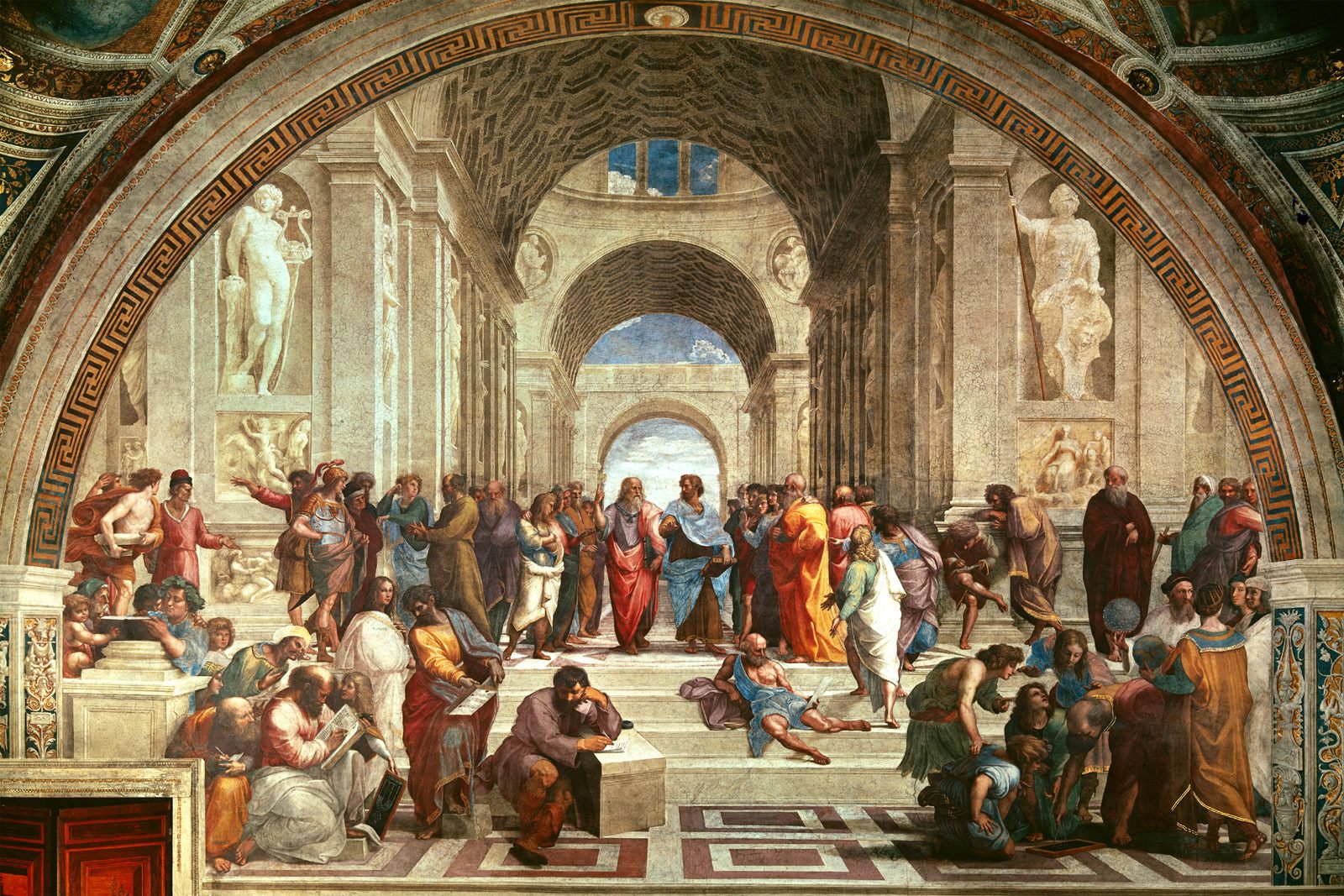
The School of Athens by the Italian Renaissance artist, Raphael

Analyses:

VERSES 2:1-4 : Treasuring the Word of God


These verses, as we have mentioned earlier, list down the terms and conditions to obtain the rewards in the proceeding verses. The phrarse, "if you receive My words", in verse 1 does not mean that we take away His words but passively receive Him. And this has a negative connotation in the book of Psalm. I Corinthians 2:14 says that "the natural person does not accept the things of the Spirit of God, for they are folly to him, and he is not able to understand them because they are spiritually discerned". In other words, if you do not possess the Spirit of God, you cannot possibly receive anything from Him. But this does not mean that there are no good works needed at all in Christianity. Proverbs 2:1 says that we must also "treasure up [His] commandments with [us]". Being passive here means being obedient to and treasuring up the LORD's commandments. Treasuring up could also mean remembering. This is because, in the Hebrew tradition, memorization is the basic in learning the word of God. Perhaps for us, learning is a matter of understanding, but not in their case. And this too explains the acrostic structure in the Bible. The word treasuring up in Hebrew means to store up, as in storing up a treasure chest. Let us be reminded for a moment about the story of the nativity when the wise men followed the star to find Jesus. The did not merely follow the star and find Jesus, didn't they? Herod had to first assemble the chief priests and scribes of the people to inquire where the Christ was to be born. Then, the wise men and Herod finally figured out the prophecy, "And you, O Bethlehem, in the land of Judah, are by no means least among the rulers of Judah; for from you shall come a ruler who will shepherd my people Israel". The wise men did not only depend on the star to find Jesus, but also consult with the Word of God. Meanwhile, the chief priests and scribes of the people knew about (and have memorized) the prophecy since birth, yet they have never get up to find Jesus. The wise men were able to find Jesus merely from reading a verse from the Bible, yet the chief priests and scribes refuse to walk 4 kilometers to find Jesus who is talked about in the whole Bible. I do  not mention this so that we need only to learn one verse, the point of all of these is to treasure the Word of God. In the language of Jonathan Edwards, we might also claim that they lack religious affection in their treasuring of the Word of God. Once again, it all starts with the LORD's initiative, but there is also a need for us to respond.


Wednesday, October 11, 2017

Mengenal Keindahan Tradisi Musik Sakral Kristen - Vik. Jethro Rachmadi

Marilah kita memulai dengan kesederhanaan dalam musik. Lagu hymn, yaitu According to Thy Gracious Word yang dikarang oleh James Montgomery, adalah sebuah lagu hymn yang dinyanyikan selama Perjamuan Kudus. Hymn dan liriknya adalah sebagai berikut:


Untuk menganalisa sebuah musik, pertama-tama kita harus mencari adanya pengulangan dalam musik tersebut.
Dalam hymn yang sedang kita bahas saat ini, kata remember (ingat) diulang pada akhir dari setiap bait, namun di dalam kondisi yang berbeda-beda: I will remember Thee (aku akan mengingat Engkau), and thus remember Thee (maka saat ini, aku akan mengingat Engkau), I must remember Thee (saya seharusnya mengingat-Mu), Will I remember Thee (aku akan tetap mengingat-Mu), dan akhirnya, Jesus, remember me (Yesus, ingatlah aku).

Sesuai dengan setiap kondisi dan lirik yang tercermin pada setiap baitnya secara keseluruhan, bait pertama lebih sesuai untuk dinyanyikan sebelum Perjamuan Kudus dan bait kedua dinyanyikan selama Perjamuan Kudus.
Sementara itu, pada bait ke 3 dan 4 dapat kita nyanyikan sehari-hari, dan bait ke 5 juga memberikan nuansa tentang suatu kelangsungan hidup sampai pada kematian.
Dan akhirnya, pada bait ke 6 menyatakan adanya kehidupan setelah kematian (akhirat).
Bahkan hymn yang sederhana ini pun dapat mengekspresikan secara keseluruhan perjalanan hidup seseorang.
Oleh karena itu, lagu hymn yang tradisional seringkali terdiri dari banyak bait (dapat terdiri dari 12 bait bahkan lebih), sebab mereka tidak hanya menekankan waktu yang saat ini saja dan pada keberadaan diri sendiri, dimana akar dosa adalah karena adanya pemusatan pada diri sendiri (self-center).
Sebuah lagu hymn dengan banyak bait dapat mengajak kita untuk keluar dari diri kita dan mengajak kita untuk melihat Sesuatu yang bukan kita. 
Hymn ini diakhiri dengan kalimat Jesus, remember me (Yesus, ingatlah saya), yang mengingatkan kita akan pertanyaan: Seberapa seringkah kita berdoa dan memohon kepada Allah untuk mengingat kita? Bukankah hal ini tidak terlalu sering kita lakukan?

Mengenai musik sakral tradisional, orang seringkali bertanya mengapa harus menggunakan musik yang kuno? Pada masa lalu, Allah bekerja dengan banyak cara dan melalui beberapa hal yang kita tidak sadari.
Beberapa orang juga menyatakan bahwa musik adalah masalah pilihan dan selera. Tetapi, orang yang mengidap diabet memiliki kecenderungan yang besar untuk menyukai coklat. Bukankah orang-orang seperti ini dapat dikatakan sebagai orang yang tidak bebas, melainkan dikendalikan
—bahkan dibunuh—oleh selera mereka sendiri.
Kita selalu berpikir bahwa jika sesuatu itu bersifat subyektif, maka tidak dapat sekaligus bersifat obyektif. Namun, musik dapat bersifat subyektif dan sekaligus memiliki obyektifitasnya. Memang benar bahwa ada kalanya orang mendengarkan musik yang sama, tetapi memiliki persepsi yang berbeda terhadap musik tersebut. Contohnya, apa yang saudara pikirkan ketika saudara mendengarkan nada seperti ini?:


Jika seandainya ada lima puluh orang di dalam ruangan ini, dapat dipastikan akan ada lima puluh perbedaan pandangan.
Nada seperti ini mendahului tentara yang akan maju berperang, atau suatu pawai yang mengiringi kedatangan raja, atau suatu nada kemenangan, dll.
Tetapi saya percaya bahwa tidak ada seorangpun yang memiliki persepsi, bahwa nada semacam itu menyatakan suatu kesedihan atau ratapan.
Tanpa obyektifitas di dalam musik, maka akan sulit untuk membuat musik dalam dunia perfilman. Karena, tujuan utama musik dalam perfilman, memiliki arti dan pesan yang khusus bagi adegan tersebut. Suatu adegan dengan background musik yang berbeda, dapat memberikan dua persepsi yang jauh berbeda pula, di mana perbedaan itu mengatur kategori dari suatu film.
Contohnya:


Sekarang mungkin saudara akan berargumentasi bahwa komposer seperti Bach cocok bagi orang Eropa, namun tidak cocok untuk orang India, Cina, dan terlebih tidak cocok untuk orang Indonesia.
Tetapi statement tersebut telah terbukti tidak benar, karena karya Bach yang berjudul Air on G-String, telah menjadi favorit bagi orang Arab dengan memberikan lirik Muslim.


Bach's Air "On the G-string" from his 3rd orchestral suite in D major, BWV 1068.

Jika demikian, mengapa kita perlu untuk mengapresiasi dan membicarakan musik? Jika kita berkeinginan untuk memberikan apreasi kepada musik, maka kita harus setuju bahwa ada satu jenis musik yang lebih tinggi daripada jenis musik yang lain. Jawaban dari hal ini adalah bahwa musik itu sangat memiliki kuasa/pengaruh, pengaruhnya sangat halus/tidak terasa. Yang saya maksudkan halus di sini, adalah bahwa pengaruhnya sangat tersembunyi/tidak nampak. Musik itu seperti garam, misal, ketika kita makan french fries tanpa garam, kita akan komplain tentang tidak adanya garam. Tetapi ketika kita makan french fries dengan garam, kita tidak akan memuji garamnya.
Akan sangat aneh jika kita mengatakan, "Alangkah lezatnya garam ini!", sebaliknya, akan lebih masuk akal, jika kita mengatakan, "Alangkah lezatnya french fries ini!"
Kita tidak pernah menyadari tentang keberadaan garam, walaupun hal tersebut sangat memberikan pengaruh. 
Inilah sebabnya, kita harus mengapresiasi dan membicarakan musik. 
Kita sadari atau tidak, musik memberikan pengaruh terhadap pandangan dan perspektif kita terhadap segala sesuatu.

Understanding the Beauty of Sacred Christian Music Tradition - Vik. Jethro Rachmadi

Let us first begin with simplicity. The hymn According to Thy Gracious Word by James Montgomery is a hymn commonly sung during a Holy Communion. The hymn is as followed:


In analyzing a piece of music, we must first look for any repetitions in the music. In this case, the word remember is being repeated at the end of each verse, yet in different tenses: I will remember Thee, and thus remember Thee, I must remember Thee, Will I remember Thee, and finally Jesus, remember me.
According to these tenses and the lyrics of each verse as a whole, verse 1 is most likely to be sung before the Holy Communion and verse 2 during the Holy Communion. While stanzas 3 and 4 could be sung in our daily lives and verse 5 too has a sense of continuity even until death, and finally, verse 6 speaks of the afterlife.
Such a simple hymn could express the journey of one's entire life. This is why traditional hymns often consist of multiple verses (about12 verses or more), because they focus not at the present time and one's self-ness, for the root of all sins is self-centeredness. A hymn with many verses may engage us to pass ourselves and to see what Is beyond ourselves. The end of the hymn says Jesus, remember me, reminds us of the question: how many times do we pray and ask God to remember us? Very infrequently.

Speaking of traditional sacred music, people usually ask why use old music? In the past, God worked in many ways and through many things that we are unaware of. Some people may also claim that music is a matter of preference and taste. But diabetic people do have a greater tendency to love chocolate. Are those people not free people, because they are drivenand murderedby their own taste? We love to think that if a matter is subjective, it could not then be objective. However, music is both subjective and objective. It is true that many ears listening to the same music will result in many perceptions. For example, what do you think of when you listen to this tune?:


If there are fifty people in this room, there surely is a possibility of us having fifty different perspectives: this tune is preparing the troops for battle, the procession of a king, a tune of victory, the list goes on. But I am certain that nobody would perceive the tune as a sad and lamenting tune. Without objectivity in music, there would not be any music filmography/music in films. Because the main intention of musical compositions in films is to deliver a specific message or meaning to a particular scene. A scene with two different music could result in two drastic perceptions, which difference also dictates the genre of the film. For example:


Now you might argue that a composer like Bach is suitable for Europeans, but not for Indians, Chinese, and definitely not for Indonesians. But this has been proven to be a false statement because even Arabians use  Bach's Air, one of the most famous Bach's compositions to sing Muslim lyrics.

Bach's Air "On the G-string" from his 3rd orchestral suite in D major, BWV 1068.

Why then do we need to appreciate and talk about music? If we are willing to appreciate music, then we must agree that there is greater music then the other. The answer to this question is that music is powerful, yet subtle. What I mean by subtle is that it possesses a hidden influence. Music is like salt. When we eat fries without salt, we would complain about the absence of salt. But when we eat fries with salt, we would not praise the salt either. It would be odd for us to say, "how delicious the salt is!",  instead, it would make a lot more sense to say, "the fries taste great!" We are never aware of the salt's presence, yet it has a great influence. This is why we ought to talk about music and to appreciate it. Music affects our worldview and our perspective about all things with or without our knowledge.